Wherewithal Grants: The Value of Artists’ Research (Part 1: Biomythography)
Wherewithal Grants is a funding source for artists in the DC-area. Generously funded by The Andy Warhol Foundation for the Visual Arts as part of its Regional Regranting Program and managed by Washington Project for the Arts, the program supports artists in two distinct areas: (1) research & development and (2) projects & presentation. The area of research & development has proven to be particularly valuable to DC-area artists as a way to address the lack of support for idea development available to artists generally.
Over the next few months, Nathalie von Veh, Wherewithal Regrants Manager, will look back at the first six years of the Wherewithal grant program to explore the question of what is artists’ research and why it’s important to support. Each story in the series will highlight a different theme that has emerged across multiple projects and discuss the various ways in which artists have approached these themes through their research.
We start with the theme of autobiographical myth-making.
What becomes possible when artists are supported in their research and ideation practices without the expectation or requirement of producing an outcome intended to be exhibited or sold? Why is it important to distinguish and support artists’ research separately from the production and presentation of artwork? And what exactly is artists’ research anyway?
Every fall we host virtual presentations where current Wherewithal Research grantees share the in-process artwork and research that they’ve been developing throughout the grant period. The synchronicities that come to light in each cohort are always really beautiful to observe, revealing similar themes and ideas that artists are exploring. These threads become apparent during conversations in our monthly meet-ups, and are especially highlighted during these presentations. Last fall, one particularly strong theme emerged in our 2025 cohort: biomythography.
The term refers to a style of writing that weaves together myth, history, and personal narratives. The technique is most famously used by Audre Lorde in her 1982 novel Zami: A New Spelling of My Name. Unlike Lorde, our Wherewithal research grantees are all visual artists so the ways that they are using this technique throughout their research are incredibly multidisciplinary.
Nakeya Brown: Even beloved things move
Biomythography was first cited in the grantees’ presentations by conceptual photographer Nakeya Brown. Nakeya received the Wherewithal research grant to explore the history of objects, with a particular focus on uncovering their often overlooked connections to Black femme lives. Nakeya’s photography has been published extensively and with recent appearances in Essence, Aperture, BmoreArt, Vogue, and Wallpaper*. This research grant allowed her to deepen her practice, weaving speculative and historical narratives into the creation of a new series of photographs which she shared exclusive glimpses of during her presentation.
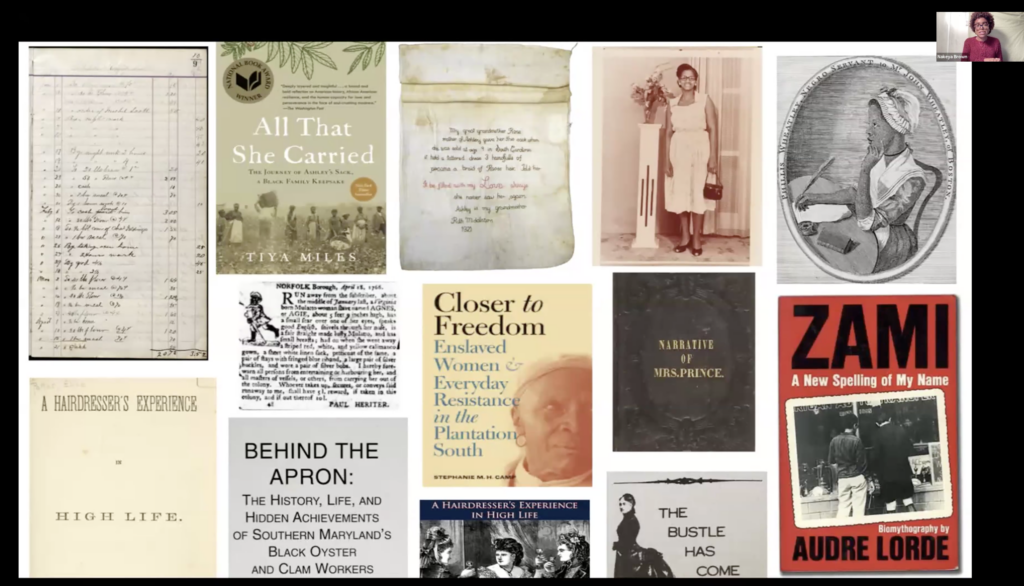
Nakeya’s research was grounded by the following questions: Whose lives can past objects reveal in meaningful ways? What material histories out of Black womanhood remain hidden in plain sight? How can we create Black femme spaces through material culture today? To begin answering these questions, she read biographies written by Black women living in the Mid-Atlantic over the past several hundred years. From those diary accounts she paid attention to the objects that were referenced and then connected them to objects collected in regional museums including Sandy Spring Museum in Maryland. A particularly compelling aspect of this work is how Nakeya is weaving this historical research into a collaboration with her two young daughters. She asks her daughters to play with the objects she uncovers, making arrangements for her still-life photographs. By collaborating with her daughters, Nakeya brings her own life and lineage into her collaborations with a past, both real and speculative.
For the past decade, Nakeya’s focus was centered on objects and portraits of Black women, focused particularly on the beauty industry. This new body of research that she worked on through this grant opened up new avenues for her practice, expanding her still lifes to document objects from the 17th and 18th centuries. She is just now exhibiting some of the photographs that have emerged from this new direction at the Bozar Centre for Fine Arts in Brussels, Belgium, as a part of the “Picture Perfect: Beauty Through a Contemporary Lens” exhibition that opened this past March. The exhibition is on view through August 2026.
Adele Yiseol Kenworthy: The Shape of Care
Interdisciplinary artist Adele Kenworthy was another grantee in the same cohort whose research directly referenced the concept of biomythography. Throughout the 2025 grant period, Adele explored their mother’s rituals of visible hope—ancestral practices absent from museums and archives—as the last remaining connection to her Korean heritage. She focused on the question: How do we preserve the unspoken oral histories written by our bodies? Through this inquiry, Adele tended to counter-memories and how they exist in public for the AAPI diaspora in the DC metro area, beginning with the Chinese hand laundries in Old Town Alexandria. She thought about how memories could take physical shapes and forms and how they could be incorporated into multidisciplinary work including performance and photography.
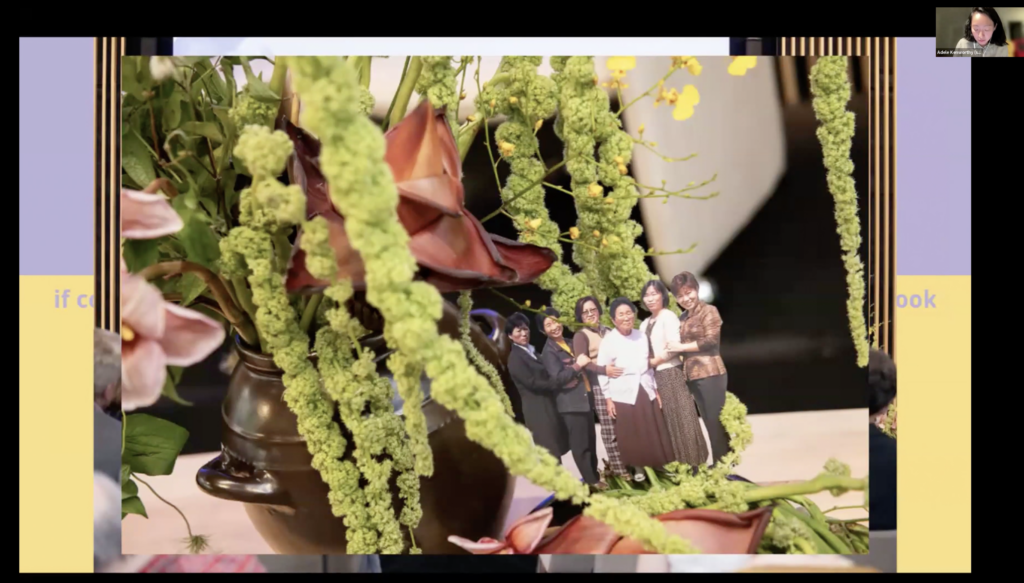
During her presentation, Adele described biomythography as a “method for enacting hybridity, holding a multiplicity of temporalities and cultural legacies together.” Similarly to Nakeya, Adele often weaves her experience being a mother into her practice, bringing speculative and cultural investigations into her deeply personal lived experiences. She’s currently continuing to follow these threads during her multi-year residency at MoCA Arlington.
Sobia Ahmad: The Allure of Light
In the same grantee cohort was Sobia Ahmad, a three-time Wherewithal research grantee (2021, 2025, and 2026), and currently is in the 2026 cohort as a project grantee. In 2025, her research explored an ancient Sufi parable about a group of moths and a flame, again intuitively using biomythography as a compass for her art making. Often told orally and sung in South Asian poetry, the parable is an everyday metaphor for ‘seeking.’ Sobia’s research is both an investigation into the artist’s personal background and Pakistani-American identity, as well as a poetic exploration of material practices expanding on the moth-flame metaphor. Her expansive approach to this research has engaged scientists, ethnomusicologists, and devotional poetry and music practitioners from Pakistan and India who have all contributed significantly to her thinking.
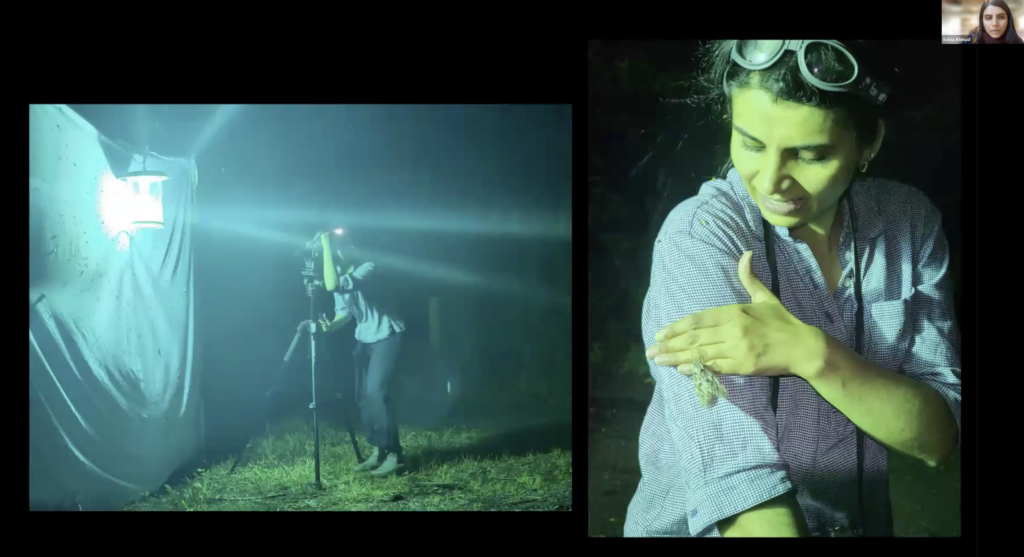
During her research presentation, Sobia shared how she experimented with different ways to film and photograph moths, processing the film using natural materials like rosemary. She also spoke with Pakistani Sufi musicians, studying how they used metaphors like the moth to communicate cultural stories. From this initial research, Sobia’s work began to manifest as beautiful abstracted photographs and films. She is currently a 2026 project grantee, and working to organize a three-day symposium, alongside her collaborator Benny Shaffer, that will bring together a cohort of artists, filmmakers, and poets whose work probes land and film as reciprocal sites of encounter. The symposium, which foregrounds film as an embodied medium, will include a screening of celluloid-based experimental films, a live expanded cinema performance by Ahmad and Shaffer, along with sound artist Jessica Fuquay, and a hands-on film-processing workshop.
Thinking about biomythography as a methodology for artists to use in their research makes me think of other past Wherewithal grantees including Athena Naylor’s 2023 research project, Yiaya, for which she investigated the unknown life of her late yiayia (grandmother). Athena’s research interrogated how family histories are passed down generationally and how personal identities form from these fragmented, inherited stories. Also coming to mind is Madyha Leghari who received a 2024 Research Grant to explore the metaphor of the ‘mothertongue’ as a comprehensive term to expand on concepts of language and motherhood, both independently and where they intersect. She applied a posthumanist perspective to this research, as well as her own personal experience with motherhood.
All of these projects reveal the inspiring ways that artists are using their personal experiences as lenses to deepen their understandings of history and cultural identity, each following threads that then expand and enrich their visual practices.
The next story in this series will look at another popular theme that has emerged among various Wherewithal artists’ research projects: Material Explorations.
For more information about Wherewithal Grants and past and upcoming grant cycles, visit wherewithalgrants.org