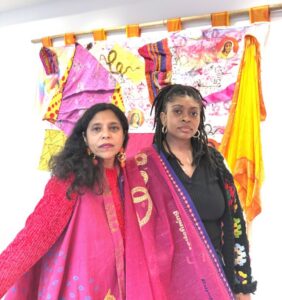
Tea Time, Woodblock Workshop, and Crochet Circles with Monica Jahan Bose and Autumn Spears
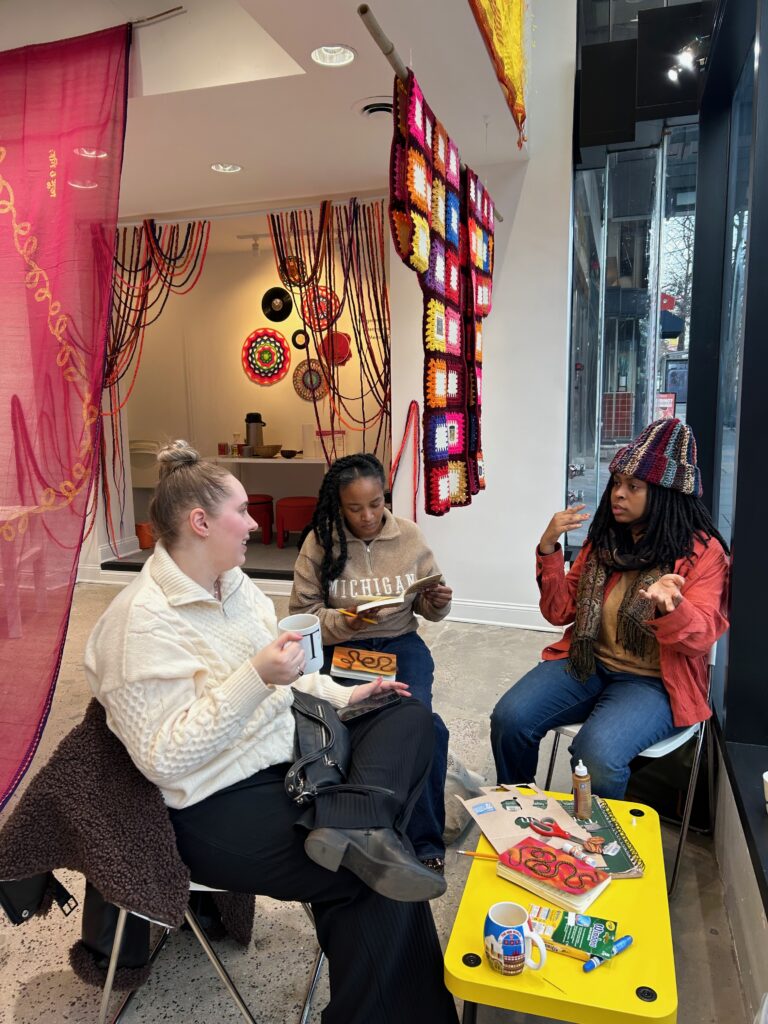
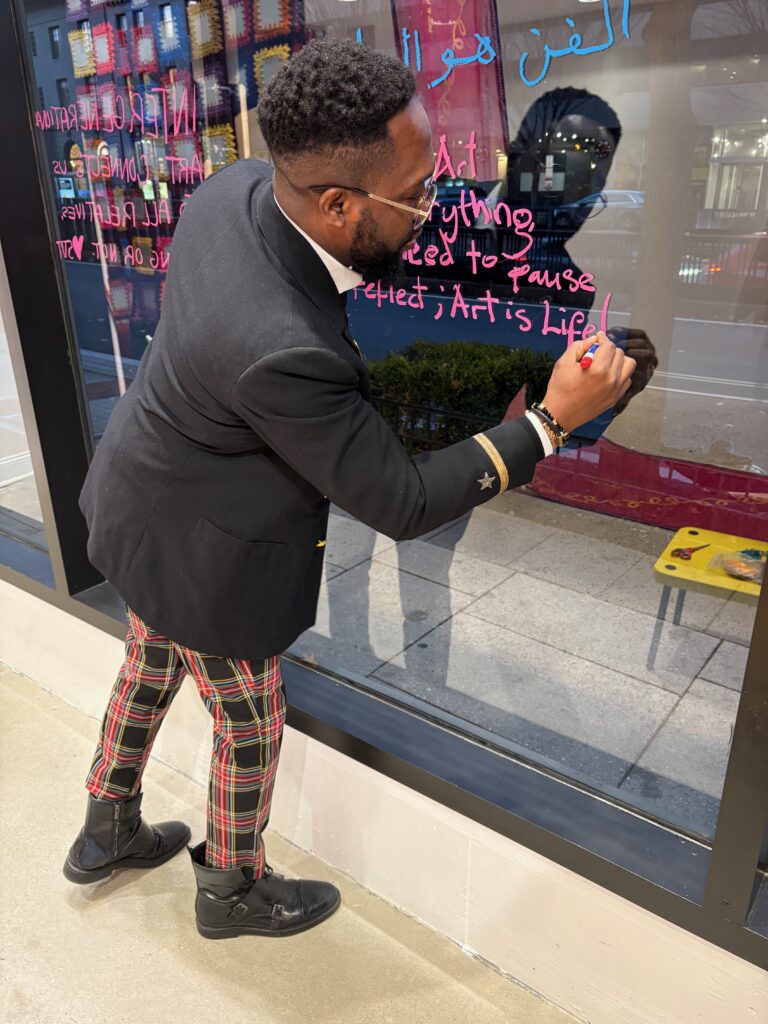
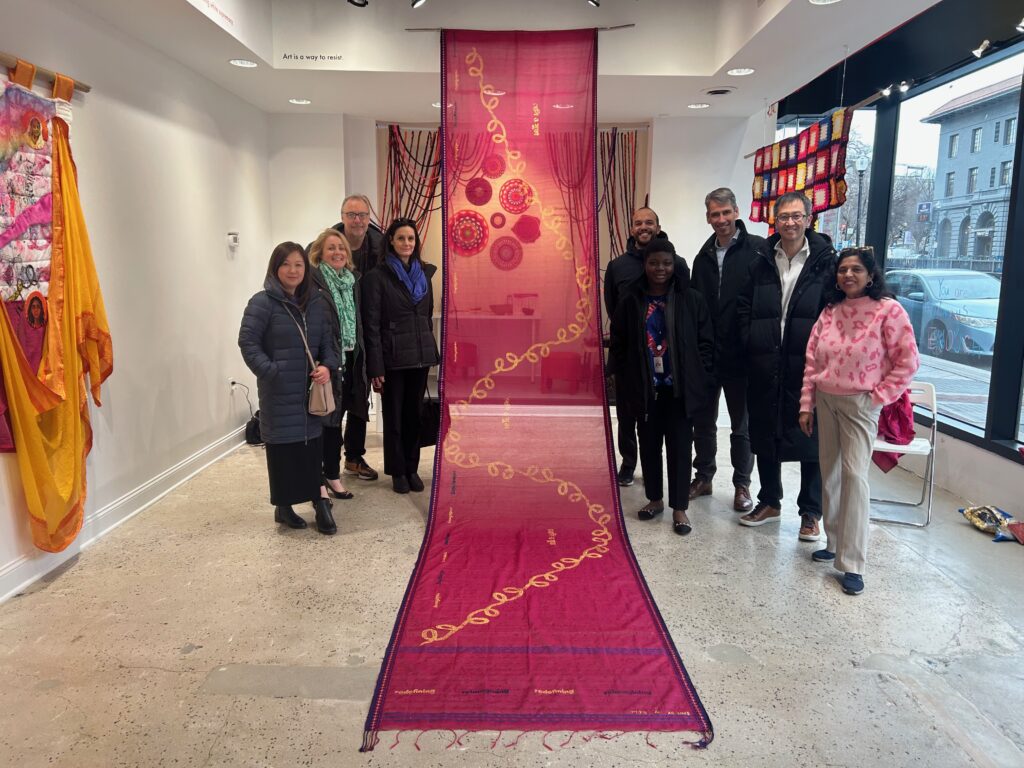
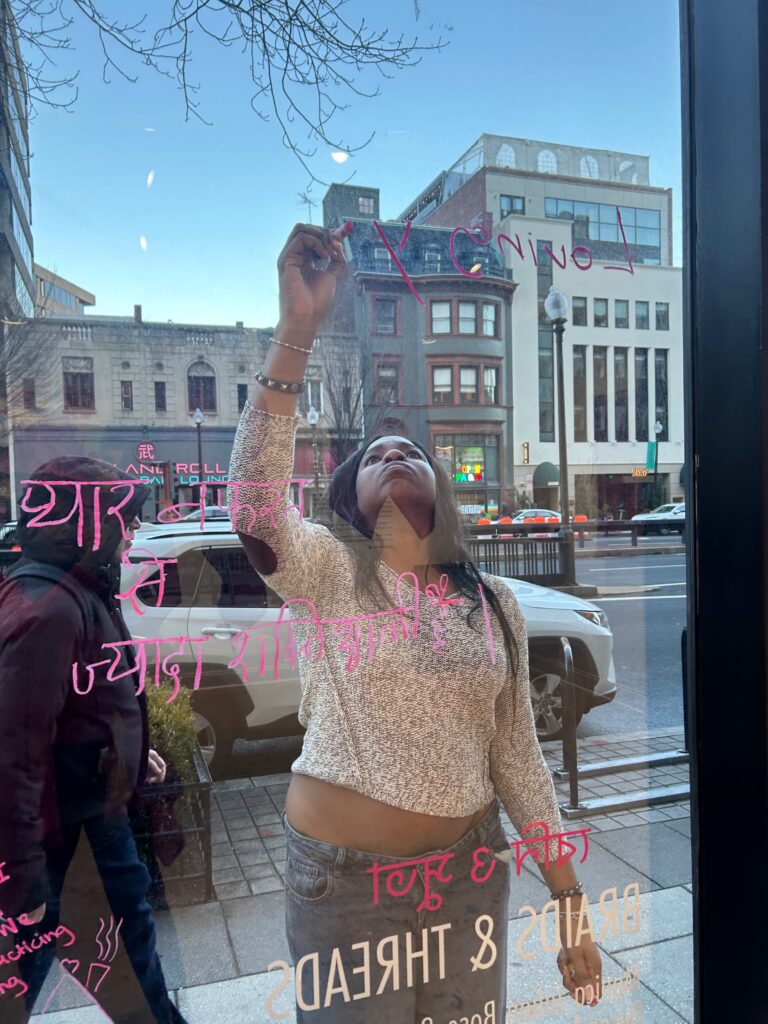
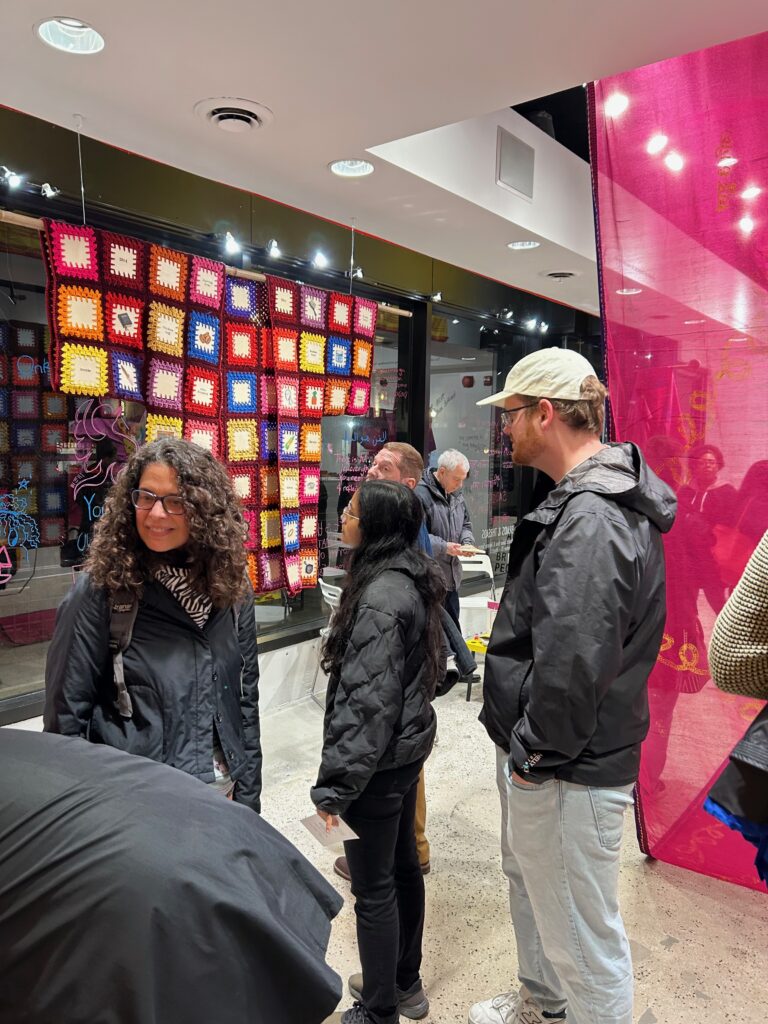
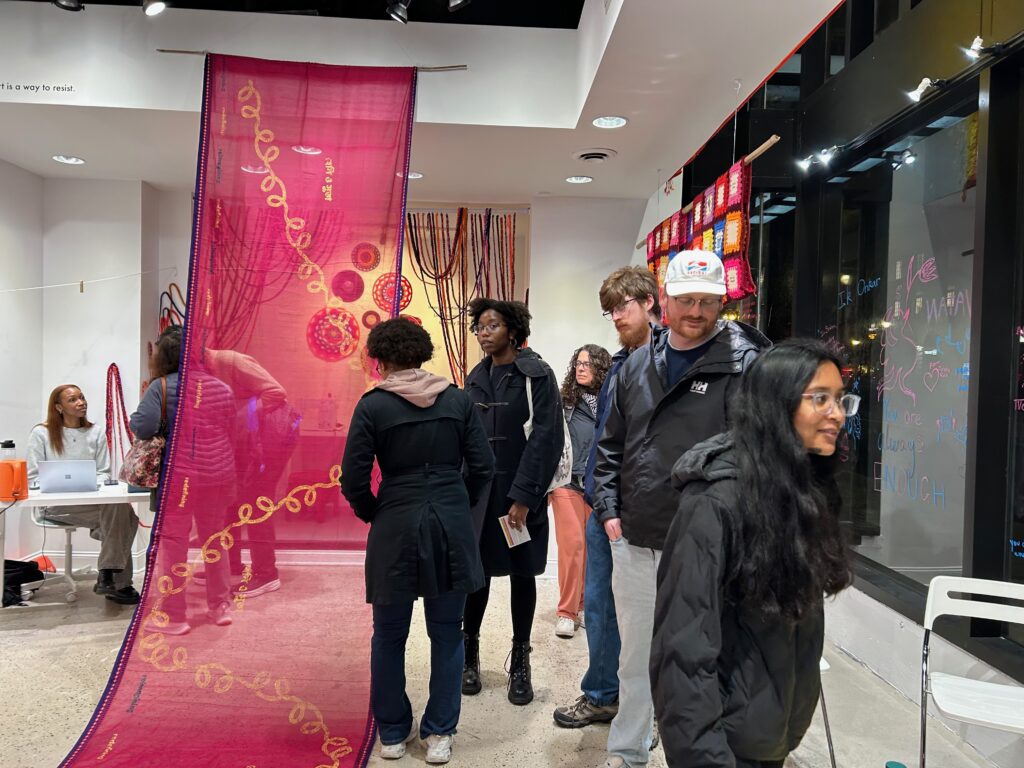
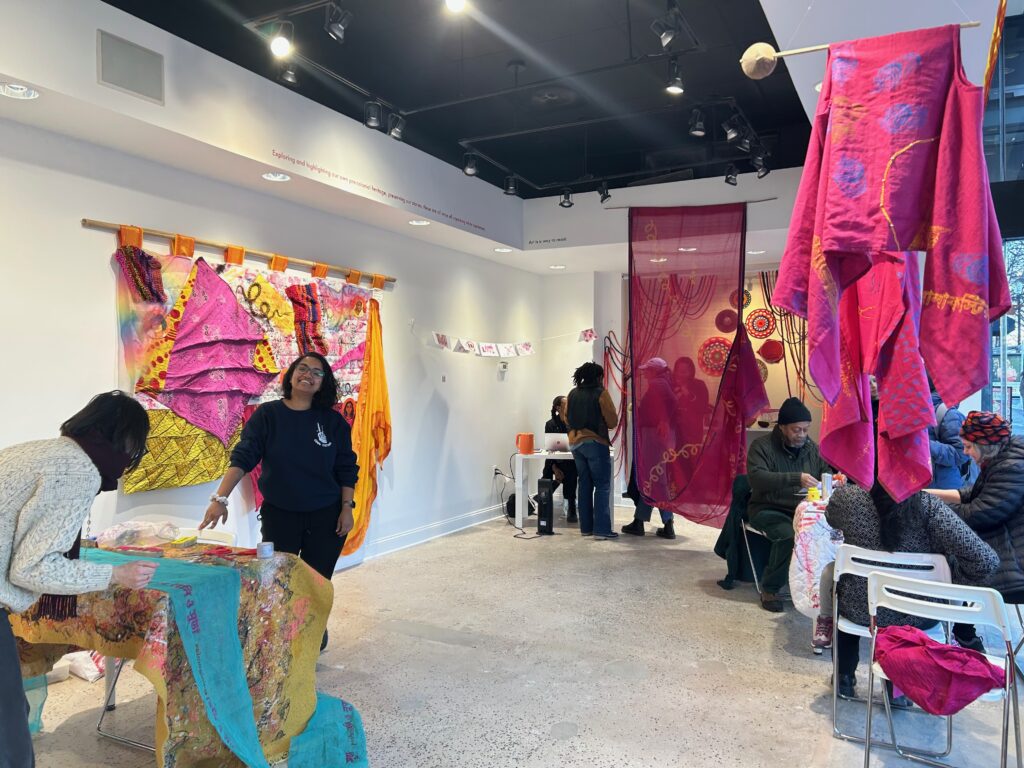
“Every Friday from 3–5 PM, artists Monica Jahan Bose and Autumn Spears welcomed the public into the project space for Tea Time—an invitation to share tea, conversation, storytelling, and art-making. Rooted in the tradition of offering tea as a gesture of warmth and hospitality, Tea Time reimagined the typical gallery experience by creating a space where visitors could comfortably linger, connect, and participate. Chairs, tables, and snacks encouraged guests to stay, while vintage vinyl from the artists’ intergenerational music collections played throughout the space. Visitors were invited to share their own stories and family histories in journals and on the gallery windows, becoming part of the exhibition itself. While engaging with guests and giving tours, Bose and Spears continued working on embroidery and drawing for the wearable art featured in the gallery.
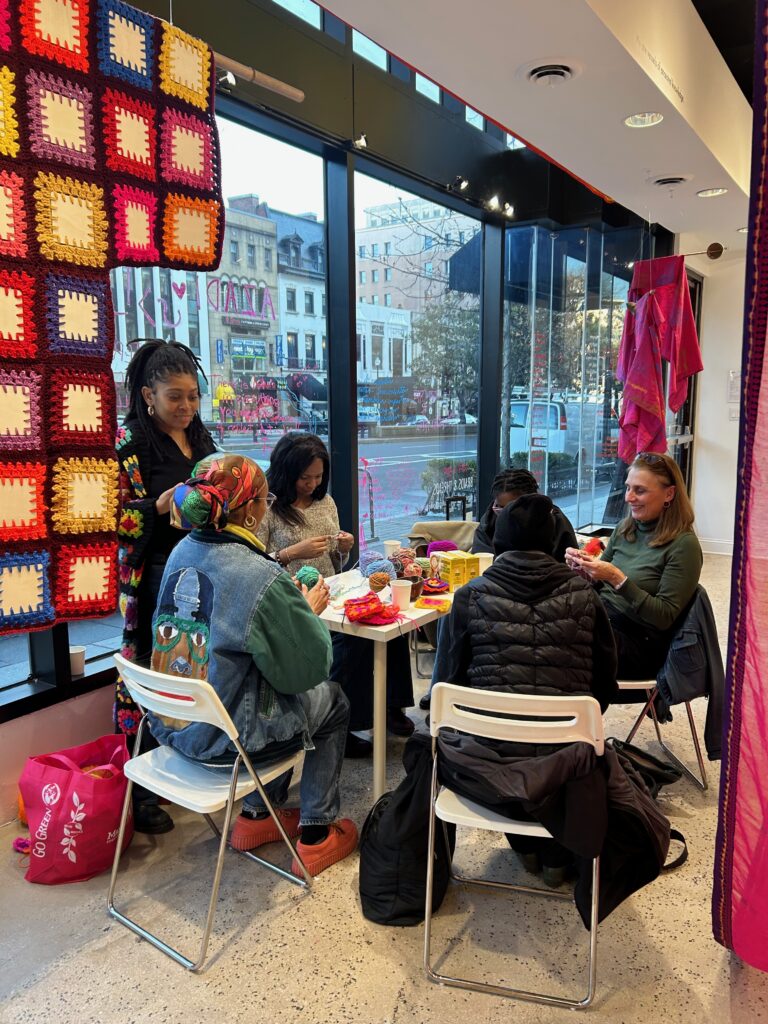
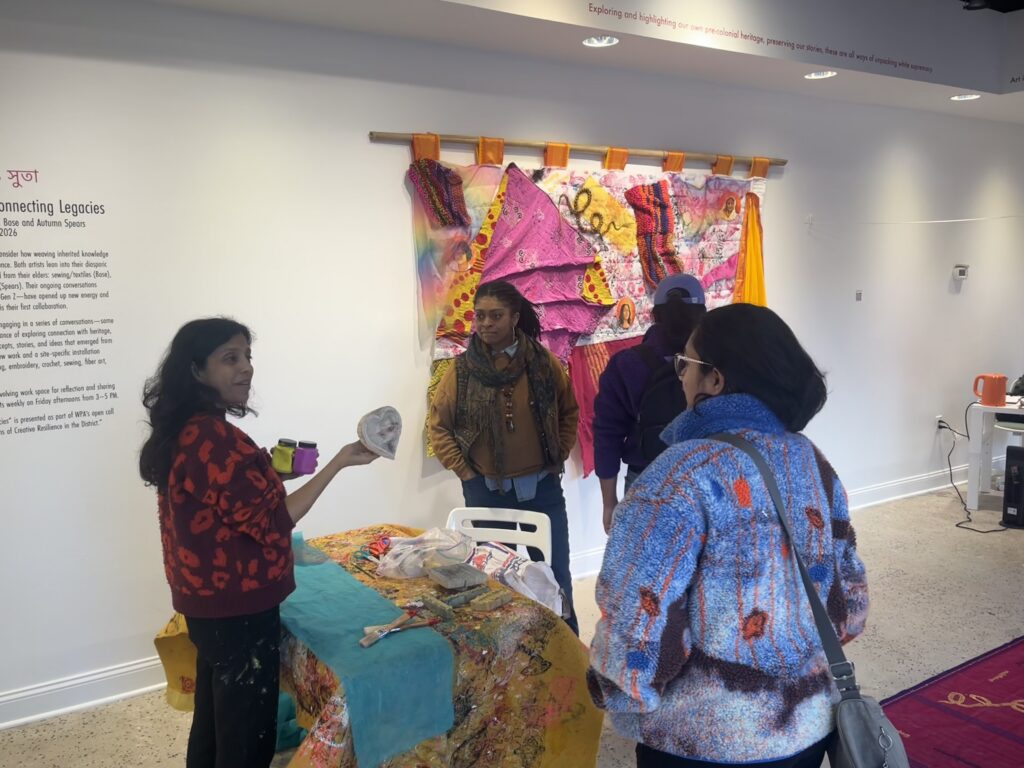
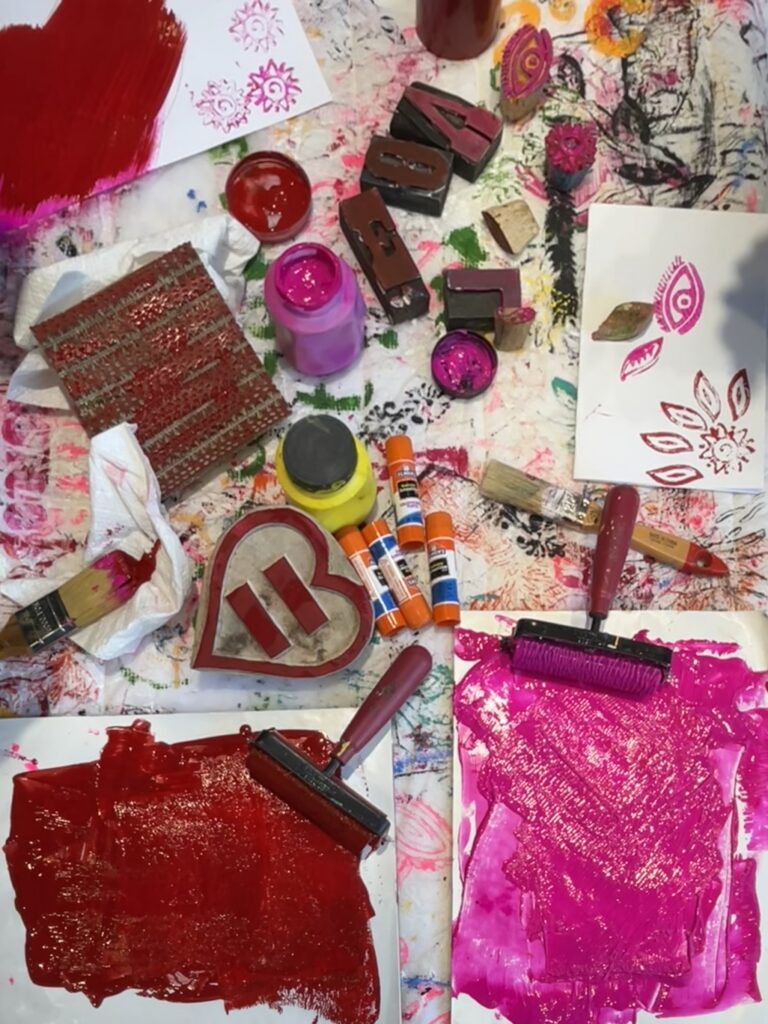
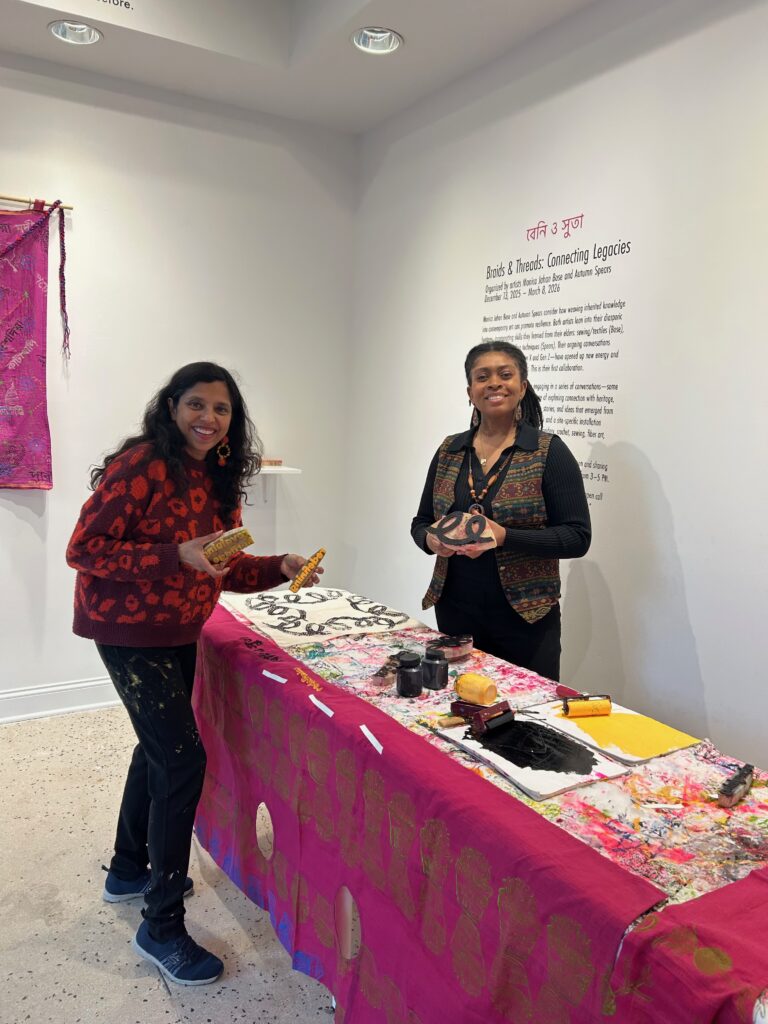
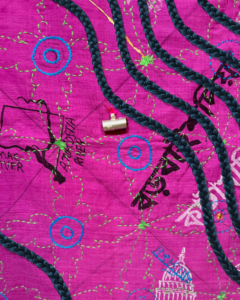
During select Tea Times in February 2026, the artists also hosted community art workshops to deepen engagement with the project. On February 13, Bose led a woodblock printing workshop where participants used Bangladeshi woodblocks to create Valentine’s cards and print sari cloth with the words “reimagining” and “redefining,” and বেনি ও সুতা (Braids & Threads in Bangla) later incorporated into the culminating performance. On February 20, Spears hosted a crochet circle that brought together women of different ages and backgrounds to crochet and connect—some continuing traditions passed down by mothers, aunts, and cousins, while others learned for the first time during the gathering. On February 27, Bose and Spears organized a woodblock printing demonstration using Spears’ braid-inspired woodblocks to print bandanas in the gallery.
A common reflection from Tea Time participants was how warm, welcoming, and special the communal space felt. Visitors included students and faculty from George Washington University/Corcoran, UDC, Howard University, Georgetown, American University, and the University of Maryland, as well as community members who discovered the space simply by passing by.